

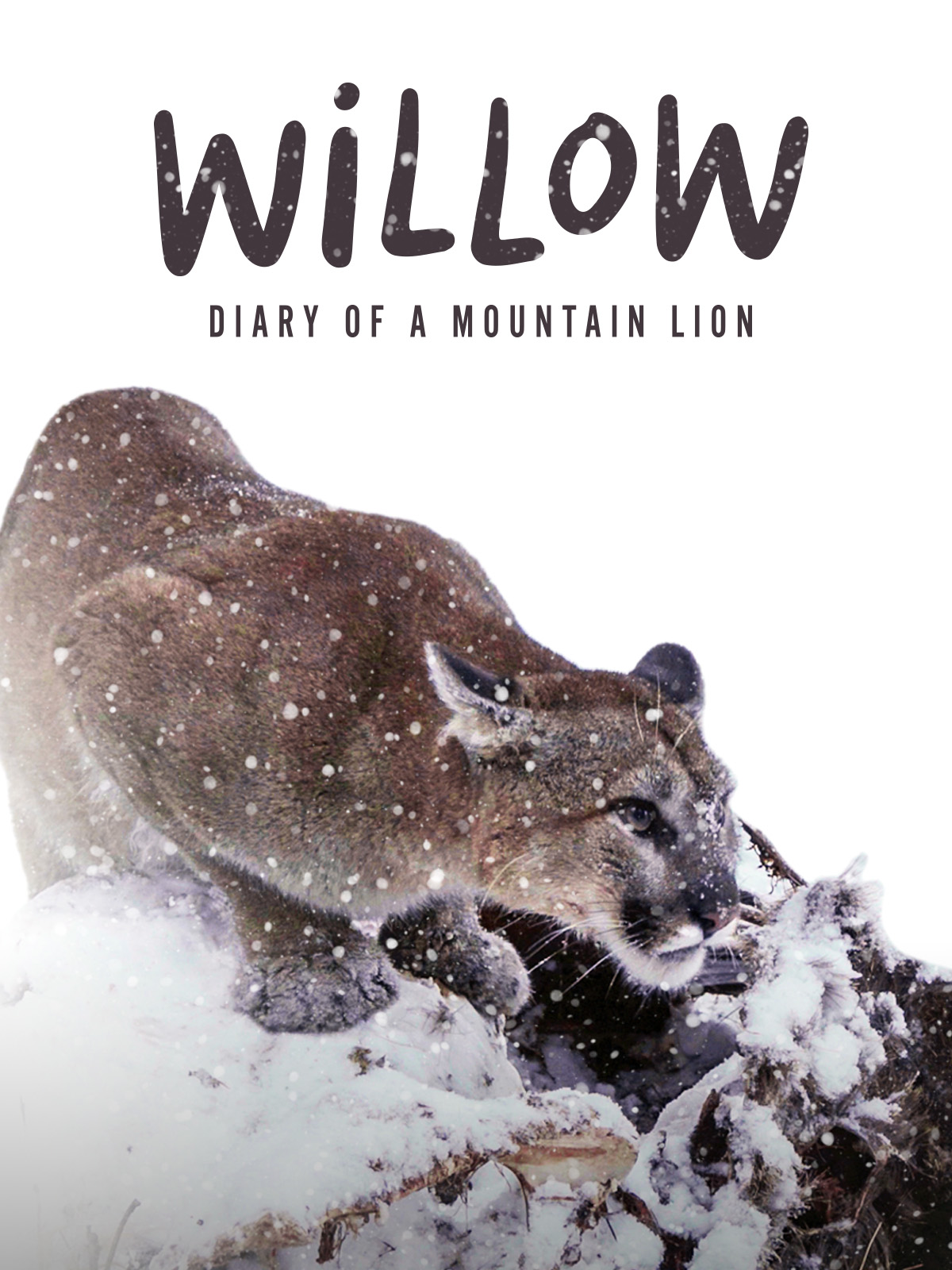
The television program Nature first aired on PBS in October 1982. Nature is a weekly documentary program that focuses on wildlife and ecosystems. Over the course of 44 seasons, there have been nearly 700 episodes produced, and I have tuned in for a sizeable number of them.
Willow: Diary of a Mountain Lion is easily one of the best. This episode begins by setting the stage. The story of the Mountain Lion named Willow takes place on the 15,000-acre research institute in western Montana called the MPG Ranch. Over the course of a decade, researchers used a collection of more than 100 motion-activated trail cameras to document the lives of various Mountain Lions living on the property.
A small team of expert trackers placed trail cameras around the remote mountainous and forested backcountry of the ranch. The project resulted in an extensive network of cameras installed on the ranch, used to monitor resident wildlife. These cameras allowed the team to “see, without being seen.” They provided a candid window into the private lives of the ranch’s Mountain Lions and many other species as well.
The team actively sought out places conducive to recording compelling wildlife footage. Cameras were set on den sites, kill caches, and well-traveled trails and pinch points. The team members’ tracking skills helped them locate the most promising spots.
Joshua Lisbon–the narrator and one of the researchers–described their approach as seeking out wildlife trails, and then, rather than following the trail to where the animal was going, backtracking to where the trail began. This technique allowed the researchers to find the most interesting places to set up their trail cameras.
Early in the project, the team collected footage of a mother Mountain Lion and her two kittens feeding at a bull elk kill. Going forward, the team recorded footage of this lion family on the regular. One of the kittens–given the ID F2 (Female 2)–soon became recognizable for her lean and willowy build. In short order, the team began referring to her simply as Willow.
In 2014, it became evident that Willow had become orphaned. The MPG Ranch borders private and public lands where hunting is permitted, and it seems likely that Willow’s mother and sibling were lost to hunters. Willow, who had still been under her mother’s care, was now on her own.
Through it all, Willow was resilient and determined. Not only did she survive, but she thrived.
In the summer of 2015, footage of Willow’s first kitten was recorded. The kitten was assigned the identifier F9 and given the name Sula. In the years that followed, the team continued to monitor Willow, Sula, and other Mountain Lions on the property. In addition, footage of many other species was recorded–much of it really spectacular. In particular, the segments featuring Red Foxes were especially interesting.
Many of the videos shared in this documentary are truly exceptional. Not only are the recorded wildlife behaviors candid and rarely seen, but the video quality is also very high. That becomes all the more remarkable when it is recognized that this episode of Nature consists almost entirely of trail camera recordings–with some drone footage thrown in for good measure. It really speaks to how far these technologies have come in recent years.
As someone with an interest in camera trapping using trail cameras, I cannot help but be envious of the wonderful accommodations the researchers at MPG Ranch have access to. The MPG Ranch is uniquely conducive to this type of work, and the researchers participating in this project are afforded wonderful opportunities to record exceptionally special footage.
Of course, there is the fantastic array of interesting wildlife on the property, which, in addition to Mountain Lions, also includes Elk, Red Foxes, Mule Deer, bobcats, Black Bear, Moose, Coyotes, Badgers, and more. The 15,000 acres of rugged backcountry and varied habitats provide an excellent backdrop and create virtually unlimited possibilities for recording truly special footage.
Things are decidedly different here in Dallas/Fort Worth. When running camera traps in the Metroplex, my primary concern in placing my cameras is ensuring that they will not be found–and that they will not intrude on other people’s outdoor activities. Setting cameras in places most promising for wildlife activity is always a secondary consideration. Because areas appropriate for camera trapping in the metroplex are limited, and most often places best suited for recording wildlife activity are also the areas most frequented by people, optimal trail camera sets are hard to come by. Almost every setup I make involves important and impactful compromises. Not so at the MPG Ranch!
I also found myself jealous of the cold Montana winters. Snow cover on the ground is a great aid to tracking and helps researchers locate the most compelling sites to monitor. Finding the same kind of places in Dallas/Fort Worth is definitely more challenging.
In the fall of 2016, Willow had her second litter. This time, there were four kittens–F16 through F19. This was an unusual situation, because Willow was still caring for the near-adult Sula when her new kittens were born.
The typical dispersal age for Mountain Lion kittens is 15 months. Because of this, Mountain Lions usually only give birth every two years. But now, with this early litter, Willow had four new kittens–and Sula to care for. To complicate matters further, Sula was reluctant to become independent and relied on her mother’s care longer than the norm. Ultimately, only two of the four new kittens survived–F17 and F19.
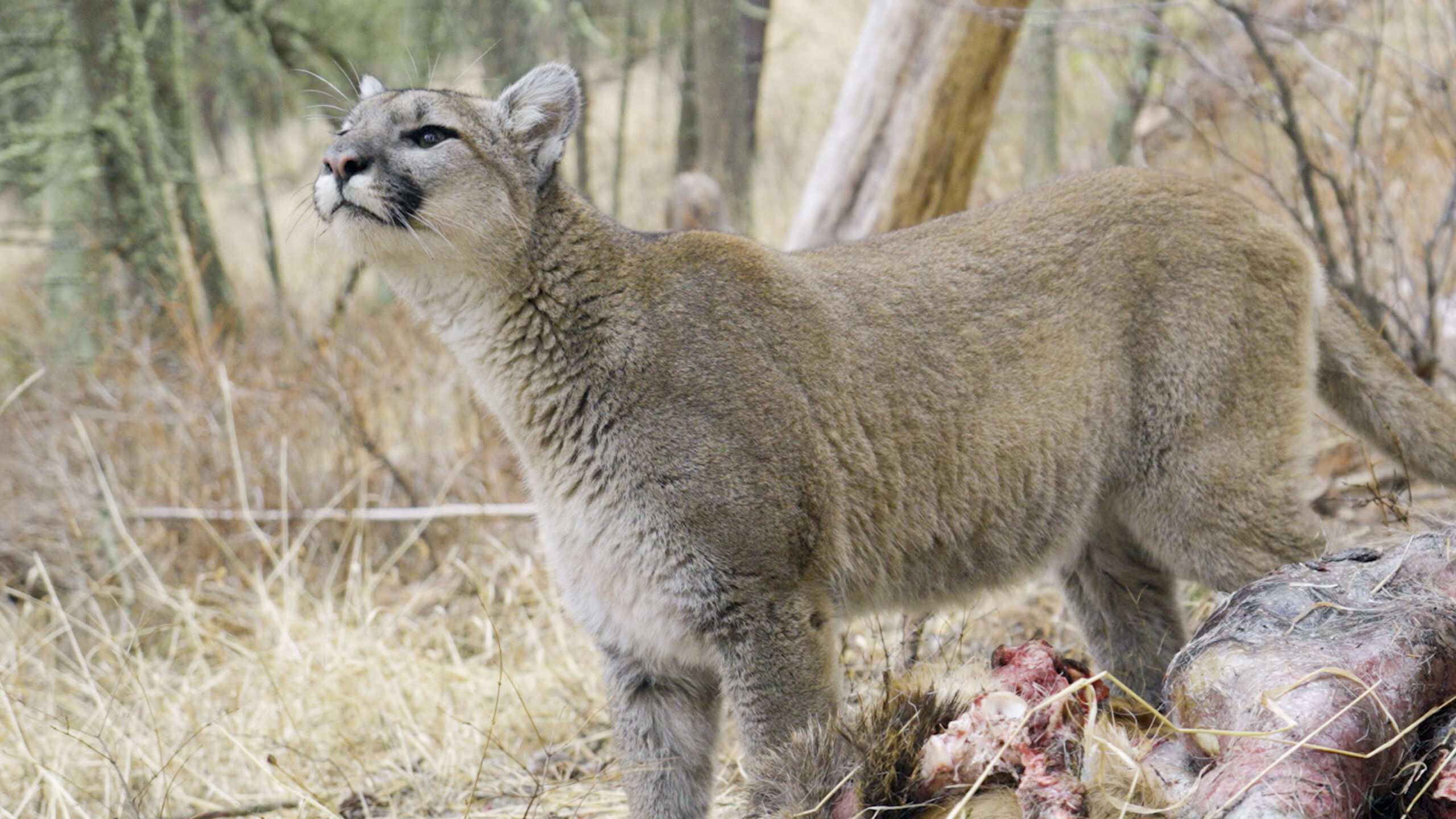
Willow’s story did not end with this litter, however. As the episode continues into the fall of 2019, it is noted that, despite hundreds of cameras running on the property, the researchers had recorded Mountain Lion hunting behavior only on four separate occasions. The documentary then cuts to a nighttime scene of Willow in a mighty and extended struggle with a 400-pound bull elk.
At only around 100 pounds, managing a big elk like this one was quite an EFFORT for Willow, but she persevered tenaciously and brought it down right in front of the camera. As luck would have it, this camera was also set up just outside of Willow’s den. The next morning, as day began to break, the researchers got perhaps the most stunning surprise of the entire project.
One by one, fat-bellied and well-fed Mountain Lions kittens began to emerge from the den until a grand total of six appeared. This was truly momentous for a number of reasons–with the rarity of a litter of this size perhaps being the most important.
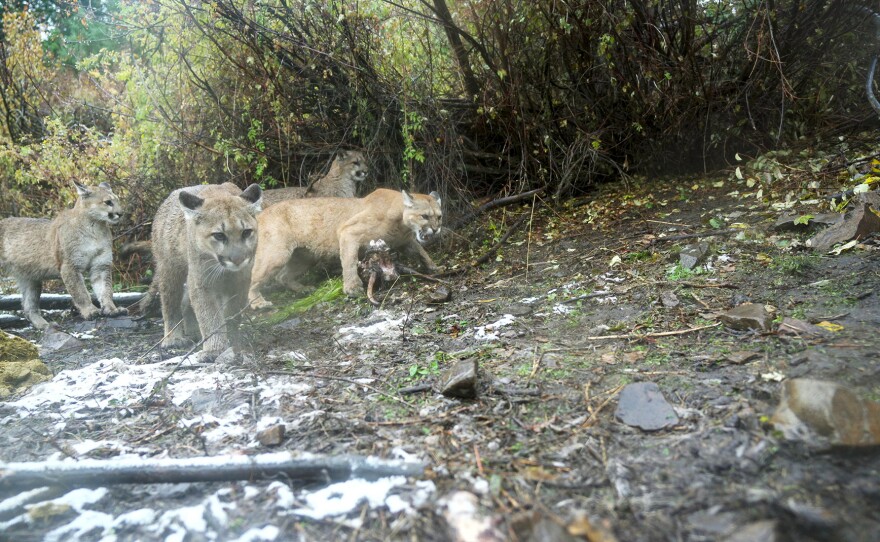
Mountain Lions typically give birth to litters of 2 to 4 kittens, with only 1 or 2 surviving their critical first year and a half. Raising a litter of kittens is an incredibly daunting prospect for a Mountain Lion mother, who provides all of the care alone and without the assistance of the father. Dangers abound–from the environment and other animal species. It is normal and expected that at least some kittens will be lost in the first fifteen months of life. Much of the rest of the documentary centers around how Willow rises to this unique challenge.
To successfully guide a litter of this size through their first year of life requires an extraordinary maternal skill, or exceptionally good luck, or both. What is more ordinary in nature is for simple bad luck to trounce reproductive efforts. An angry hail storm can decimate a nest full of hawk eggs. Late-season sub-freezing temperatures can freeze eggs solid or finish off sickly Coyote pups. Heavy rain showers can wash out Cottontail nests and inundate den sites. High winds can drop a squirrel drey full of babies to the ground. Disease and parasites are constant, ubiquitous threats to all wildlife.
But the opposite of bad luck is also possible. Some animals are fortunate enough to be blessed with runs of exceptionally good luck as well. Seasons when the weather is mild and food is abundant can make all the difference in the world.
You might tune into this episode of Nature to find out which eventuality played out for our heroine, Willow. This is an excellent documentary, and the full video is available online. Follow the link below! It is well worth a watch!
PBS NATURE – WILLOW: Diary of a Mountain Lion

Five out of Five Stars!